Thursday, 8 May 2014

Some questions about archaeological recording

I was reading a post on The Heritage Journal in regard to the archaeological 'clearance' of a Bronze Age Pond Barrow.

The BBC article linked in the post mentions that

'Archaeologists spent three years excavating it and found thousands of items and remains, indicating the site had been continuously lived on since the end of the last ice age.'
 
Now apologies for being ignorant but when, presumably commercial, archaeologists come in to do these sorts of excavations how do they usually share their findings? Am I being presumptuous in thinking that they do have to share their findings? Also where do all the thousands of items and remains go?
 
I appreciate the article says that a synopsis of the findings would go on an information board but I was just wondering where the whole report and all of the finds go.


Tuesday, 6 May 2014

ebay and recording

Now I've never sold anything on ebay but as my partner is always on it I thought I'd have a browse. Out of curiosity I thought I'd have a look if there were any similar beehive thimbles to the one I found a few weeks ago. A quick search and blimey there are a whole lot of thimbles for sale including some just like mine up for sale at the moment.

One seller called 'field-walker' currently has one up for £15. This certainly doesn't seem to be too cheap given that another one is currently at £12.50 with 12 bids. (these links might die when the auctions expire).

Firstly I never actually thought my thimble would be worth anything other than historic value (which is why it's currently in the Finds Liasion Officer, FLO, box). Am I sad that it's worth money, nope. Will I now sell it rather than get it recorded with the PAS, nope. Will I sell it afterwards. Not unless I have to.

I then had a little look at other items that 'field-walker' had for sale. One included a hawking whistle.
It had a description as follows.

You are looking at what I think is a small Medieval Hawking whistle, please feel free to research for yourself if bidding as I am not an expert, I will post on cleared payment.
Happy bidding Guys.
 
 
A couple of things came to mind when I read this.
 
Has field-walker tried to record the item with their Finds Liasion Officer? One cannot presume they did not as the FLO may have decided to not to record it although I'd think this would be very odd if it is a 300 plus year old hawking whistle which is hardly the same as a common buckle.
 
If they did not then I would have thought that by doing so then at least they would have a better description which might actually mean it's worth more. Secondly it would at least be recorded rather than be sold and probably be lost forever.
 
'Who cares, it's just something that was lost, discarded etc' I hear a lot of people think. Maybe true but what happens if someone else finds a whistle near to where that one was found, and then a few more turn up. Let's say there were 10 or 20 or 30 scattered across nearby fields all found at different times. This might mean something interesting, something to look into, but if they aren't recorded how would anyone know?
 
I would just say to any detectorists reading this then please show your FLO any items that you think might be over 300 years old (if you are unsure show them anyway) and as Steve Broom on his blog says if they can't record them now then hold onto them until they can.
 
These things are usually only found once.


Thursday, 1 May 2014

5 tasks in - Micropasts part 2

I've just been playing around on the Micropasts website as mentioned in my previous comment. I've so far done 5 tasks of the photomasking project which don't take more than a couple of minutes each. I did look at the other 3 projects which involve transcribing old record cards but well they looked a bit harder than the drawing project so I've been lazy, for the moment.

It doesn't take more than a few  minutes to get going with the photomasking project and well it's something to do while watching the TV.  

There are a few functionality issues that could be improved on but that's probably to be expected from a new website and there is a forum where you can log these errors and chat about your experiences. 

It might be tempting to think I'm being a wannabe archaeologist by getting involved in the Micropasts project but actually just as the project says it's open to all and well it's actually just quite interesting, although looking forward to seeing some more projects open up.

Given that Museums must have an absolute shed load of paper records and items waiting to be made more accessible by being 'computerised' (yes not really a word I know) then I imagine there are lots of projects to be completed.


Monday, 28 April 2014

MicroPasts

The blog Artefactsandarchaeology has a post about a project called MicroPasts which it seems was officially launched this month.

As per their website MicroPasts is

'a web platform that brings together full-time academic researchers, volunteer archaeological and historical societies and other interested members of the public to collaborate on new kinds of research about archaeology, history and heritage. It is a place where enthusiasts (of any background) can not only create high-quality research data together, but also collaboratively design and fund entirely new research projects. In particular, we want to improve how people traditionally distinguished as ‘academics’, ‘professionals’ and ‘volunteers’ cooperate with one another (as well as with other people out there who as yet have no more than a passing interest).'

From a brief little play on my lunch break it seems that you can join in with archaeological research from the comfort of your own sofa.

I note that the PAS has the project on it's website as well as I would imagine they both work closely together. Certainly how MicroPasts aim of getting people to cooperate with one another will be interesting.

Another of MicroPasts aims is to be a crowd funding site for small projects. This part is under development but I look forward to reading the sales pitches.

I imagine these sorts of projects require a lot of word of mouth marketing to be successful so well here's my part!

Saturday, 26 April 2014

I found it, so I can keep it, right?

On the Metal Detecting Forum is an interesting thread about whether you should sell stuff that you find.

It would appear that some detectorists think that if they have permission from the landowner to go and detect on their land that anything they find is theirs to do with what they may, including selling the find if they want. 

I believe this assumption is incorrect. Just because you have permission to detect metal doesn't mean that any metal you find is automatically then yours. 

Why?

Well in short then from digging around I think the simple answer is that if you own land then you also own everything in the land regardless of how it ended up in the land. This comes from a case called Elwes v Brigg Gas Co. (1886) 33 Ch.D 562 where the Judge, Chitty J, stated that lawful possession of land includes possession of everything in the land, naturally there or otherwise.

As such if a landowner gives someone permission to detect, or 'find', metal items on their land then that person, or 'metal detectorist' is merely finding what is the land owners. Just because the 'metal detectorist' has permission to find and dig,  it doesn't mean they have permission to 'take away'. 

If you are the 'metal detectorist' then if you have not entered into an agreement with the landowner that anything you find is yours then the find belongs to the landowner. 

Without such an agreement it doesn't stop the landowner letting the metal detectorist sell the item on say a 50/50 share basis. 

The ownership of property found in or on land is discussed in depth in Waverley BC v Fletcher 1996. This is a story about a chap who went detecting on a Council park and found a gold brooch. He thought the brooch was his, the Council thought otherwise. He went to the County Court and won his case. The Council then went to the Court of Appeal and won. 


Thursday, 24 April 2014

Camber Sands hoard

Just got back from a week in Camber Sands with the partner and the little man. I had hoped to do some blogging but on arriving at our rented house I soon found out there wasn't any wifi. Ooops. In hindsight though it was actually rather nice to be free from the shackles of the internet.

Being that Camber Sands is a Crown Estate beach I thought I would take my euroace with me on the off chance that I might grab an hour or two detecting time. 

The weather was great and on Easter Monday I grabbed a few hours in the evening. I've never detected a sandy beach before and it was nice being able to get the targets easily. Unfortunately that was about the only good point as the two hours consisted of mainly ring pulls, bottle tops and cans. I think I spent half of my detecting time trying to find a bin to put the next newly discovered can into. 

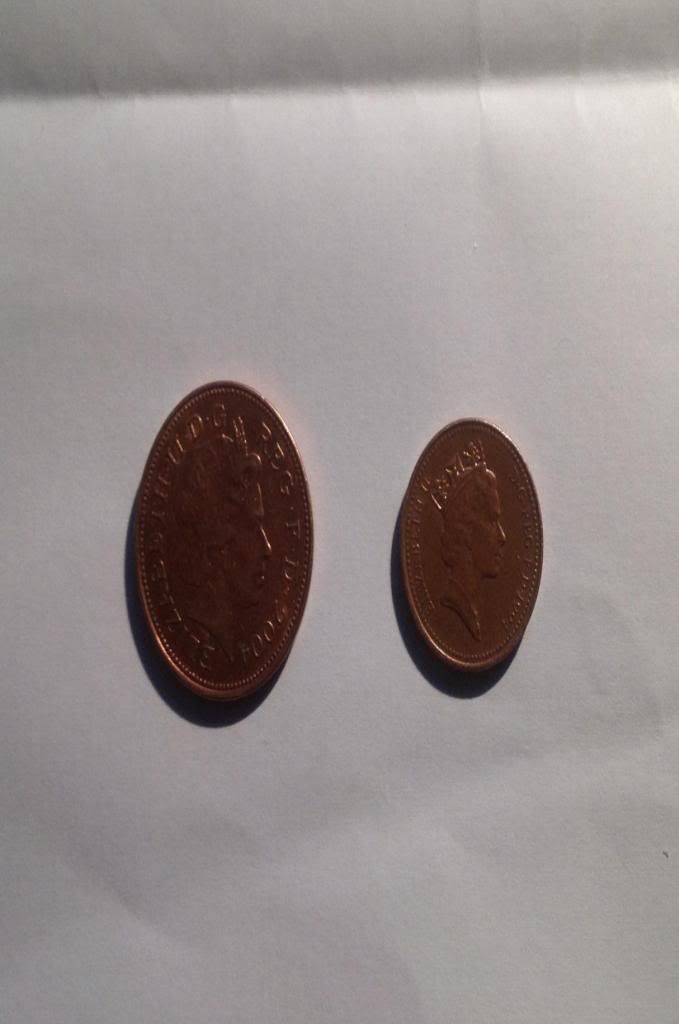
I did manage to dig out the following mighty hoard. 


Yup 3p. I tried not to spend it all at once. It was tricky.

Anyway a fab very relaxing week.
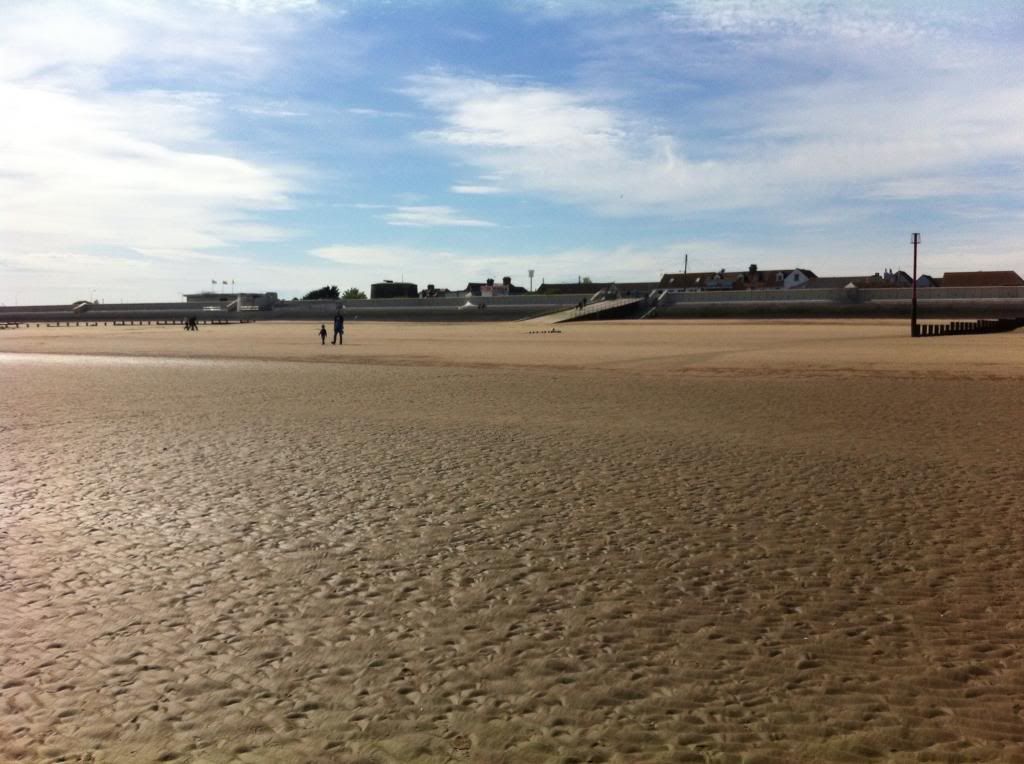
Dymchurch beach
Me and my little dude


Wednesday, 16 April 2014

Some finds from a park

One of my Local Councils allows you to metal detect on certain bits of their land with a free licence. Hrm as I'm writing this I'm wondering why I'm not saying which Council. Fear of some other detectorists ruining it? Selfishness? Not sure. Probably both.

Anyway one of the bits of land is near to where I often go to work. It consists of a number of old fields that were regularly ploughed till the 20th century when they were gifted to the Council as a park.

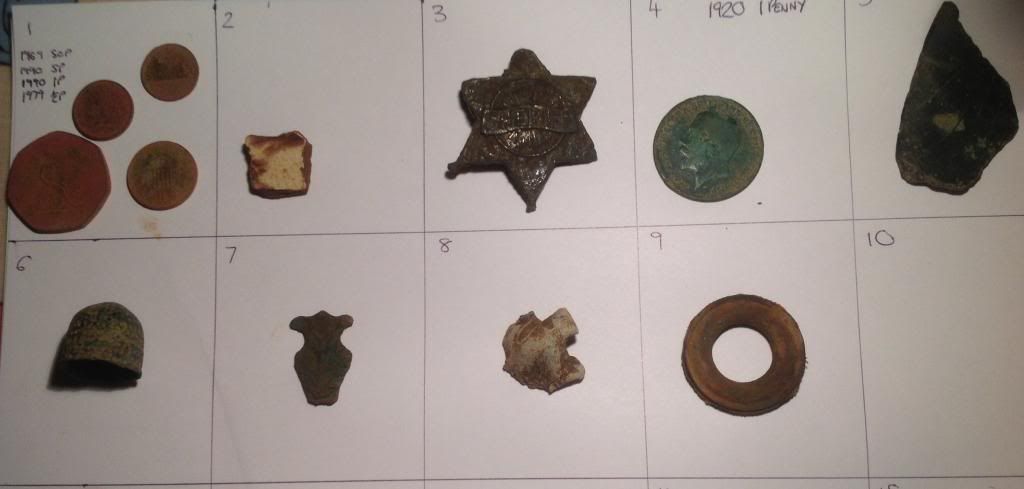
It makes for some interesting detecting. It was used for bonfire nights for quite some time until the health and safety folks stopped it so there is a fair amount of old decimal coinage, big 50 pences, decimal half pennies etc. There is also a zillion ring pulls. However there are also some older bits. I haven't done it much but have found a crotal bell and an old buckle,as below, in the past both of which have been recorded with the FLO.


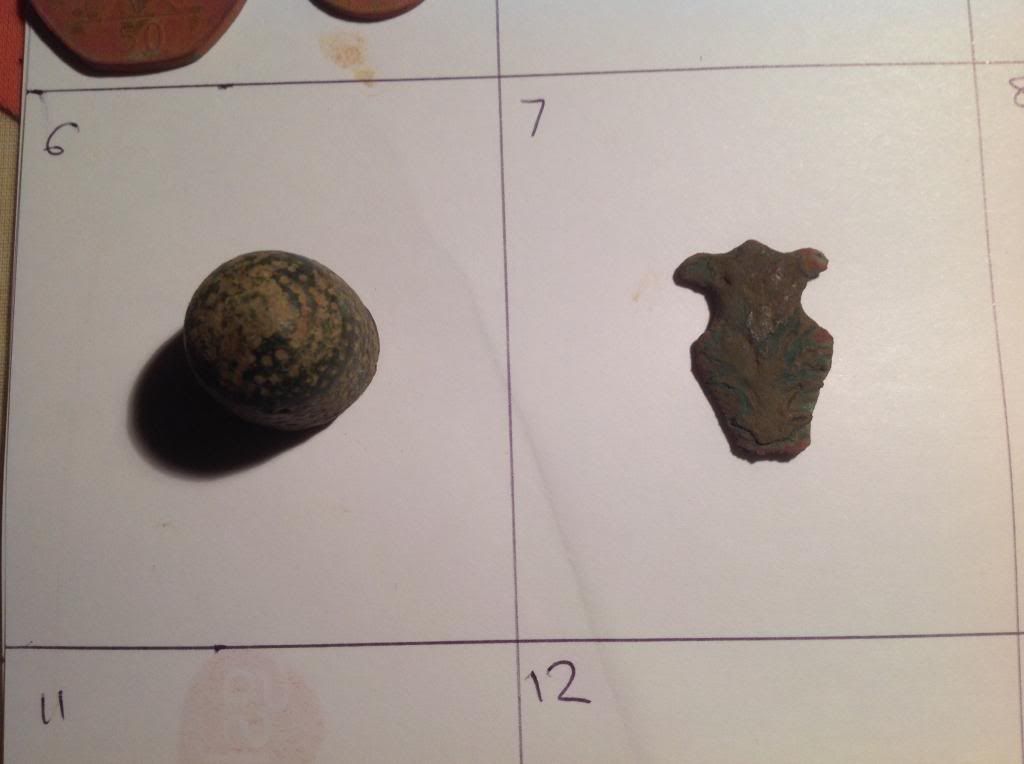
Last week I found the below. No.6 I believe is a 'beehive thimble' (more info on thimbles here) which could be from the 12th Century onwards and No.7 is a part of a sword belt mount.


Since I started this blog I wonder if I should carry on detecting the park.

There are a number of things floating around my mind as to what a responsible detectorist would do. Some of these thoughts are, in no order of priority the following.

1. I don't have a lot of land to detect so would do ploughed if I could but don't have any.
2. Anyone with a permit can detect on it and it has been detected on before
3. If I make a little slide and show it to the 'Friends of the Park' would that be a 'good' thing to do?
4. At least I get the bits that I find recorded whereas others might not.
5. I make damn sure i'm neat and tidy when I dig my holes.
6. Should I just stop thinking and just carry on detecting!


Oh yes one question for the Archaeologists who don't like detecting because it takes an item out of 'context'. Let's say a local archaeology group came in, dug a pit and did their Archie stuff, is it then any better to detect or should you then leave the rest of the field in case the entire park is subject to a archaeological dig?

Life is easier when you don't think.